

About us

The Berkeley 100 Foundation advances science by identifying 100 of the world’s most important scientific challenges, and supporting efforts to solve them through a global, prize-based competition.
We foster collaboration among leading researchers, institutions, and emerging scientists to drive meaningful, high-impact discovery across disciplines.
We envision a future where clearly defined scientific challenges spark bold thinking, global cooperation, and breakthrough innovation.
By restoring science to the forefront of public purpose, the Berkeley 100 Foundation aims to accelerate progress, expand human understanding, help solve the most pressing problems facing humanity and ensure fact-based inquiry continues to thrive in our complex world.
Rogers Story - why I started a science challenge

I was in grad school at the University of California, Berkeley, in the 1970’s, in physics, and I picked up a thin book entitled ‘Key Problems in Physics and Astrophysics’ by V.I. Ginzburg, a Russian Nobel prizewinner. It was a short list of important problems, some of which have been solved, though most are still outstanding.
When you take physics courses, your homework is problem sets, a few every week. Ginzburg’s book was like this, only on a much bigger scale. It was a problem set for the whole physics enterprise. This concept remained with me, and now 45 years later, after a career in physics, I still find the concept engaging. What if we assigned problem sets for the various sciences, maybe 10 problems for each of 10 fields? And then set up prizes for the solution of these problems? That has become the Berkeley100 Challenge.
So what’s a challenge? Well, let’s take the example of the "Longitude Problem”. The British Admiralty had suffered the loss of 2000 sailors in a navigational accident in 1707, so in 1714 they established a prize for anyone who could develop a chronometer accurate enough to enable sea captains to find their longitude. A 21 year old English clockmaker learned of the challenge and worked on it his entire life, and finally succeeded. He was awarded the final installment of the prize at age 80. This provides an example of how a challenge can inspire.
Similarly, the 1900 publication of the 23 “Hilbert problems" by David Hilbert in 1900 has served as a challenge to mathematicians ever since; Nine of these have been solved, nine have been partly solved, and the rest are outstanding. But long before, in 1637, Pierre de Fermat posed “Fermat’s Last Theorem”, a simple conjecture in number theory that has engaged mathematicians ever since. In 1963, 10 year old Andrew Wiles in England heard about this problem, and devoted himself to its solution. At age 41, he finally solved it 358 years later. Wiles rose to this challenge from boyhood, and has become one of the 20th century’s most celebrated mathematicians.
These examples show how posing a challenge to the world can inspire us. John Harrison spent a lifetime developing the chronometer, Andrew Wiles was inspired from the age of 10, and all the world’s mathematicians have been inspired by the Hilbert problems. And we are thus inspired to offer the Berkeley100 Challenge. A problem set of 100 problems in the major fields of science to inspire the whole world.
Now I’m retired from the Stanford Linear Accelerator Center where I worked in x-ray physics and accelerator physics. Ginzburg’s problems are still out there, and there are lots of other fields of science with important outstanding problems. So it occurred to me to set up challenges, like the Longitude Challenge, to make people everywhere know what these problems are, and inspire them to work toward solutions.
Fortunately, I was able to propose this concept to people at UC Berkeley, and I was delighted that they expressed enthusiasm for it. The idea is that they would do the intellectual work if I could set up an outside fundraising organization to finance prizes to be awarded to people who solve these problems. UCB will hold 10 workshops in 10 fields of science, and each workshop will establish a set of 10 problems in each field, for a total of 100. These problems will come with a set of criteria for the solutions, to avoid some of the ambiguity associated with the Hilbert problems. They are to be crisply stated problems in fundamental science, not broad goals, and the solutions should be of a nature that moves the field forward.
And this is where you come in. The project is a worldwide challenge designed to inspire both scientific work and public engagement with the enterprise of science. These challenges should be well known not just to specialists, but to the 10 year old Andrew Wiles of the world, whose genius might be focused on our problems. And for all of us, it is an opportunity to support the Berkeley 100 Foundation financially. If you have ever wanted to know what you could do to advance science, this is a very good answer. Join us.
Fortunately, I was able to propose this concept to people at UC Berkeley, and I was delighted that they expressed enthusiasm for it. The idea is that they would do the intellectual work if I could set up an outside fundraising organization to finance prizes to be awarded to people who solve these problems. UCB will hold 10 workshops in 10 fields of science, and each workshop will establish a set of 10 problems in each field, for a total of 100. These problems will come with a set of criteria for the solutions, to avoid some of the ambiguity associated with the Hilbert problems. They are to be crisply stated problems in fundamental science, not broad goals, and the solutions should be of a nature that moves the field forward.
And this is where you come in. The project is a worldwide challenge designed to inspire both scientific work and public engagement with the enterprise of science. These challenges should be well known not just to specialists, but to the 10 year old Andrew Wiles of the world, whose genius might be focused on our problems. And for all of us, it is an opportunity to support the Berkeley 100 Foundation financially. If you have ever wanted to know what you could do to advance science, this is a very good answer. Join us.
Foundation leadership
-

Roger Carr
Board Member - President
-
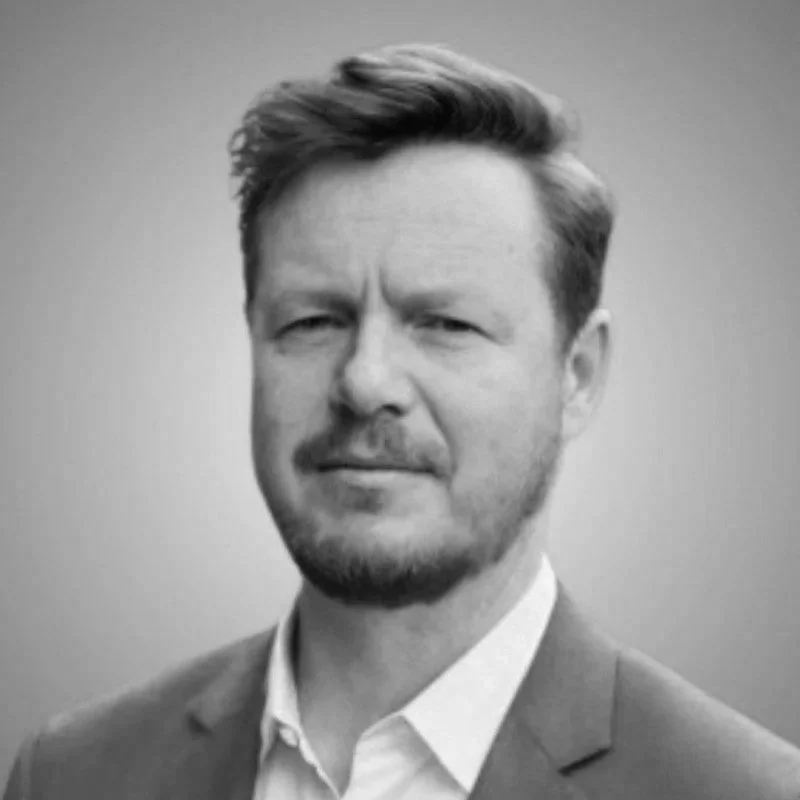
Laurent Rains
Board Member - Treasurer & Secretary
-
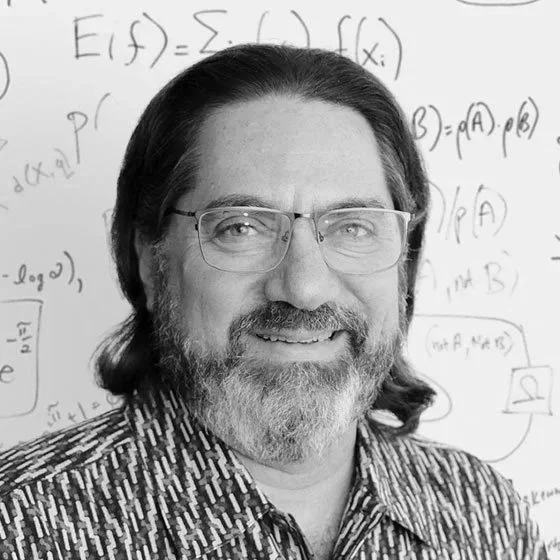
Michael Scharff
Board Member - Executive Director
-

Gary Slavit
Board Member
-

Karl Van Bibber
Scientific Advisor
-

John Pennant
Senior Philanthropic Advisor

Get involved
Join us in advancing science—your support funds breakthrough research, empowers global talent, and drives solutions to the world’s biggest challenges.